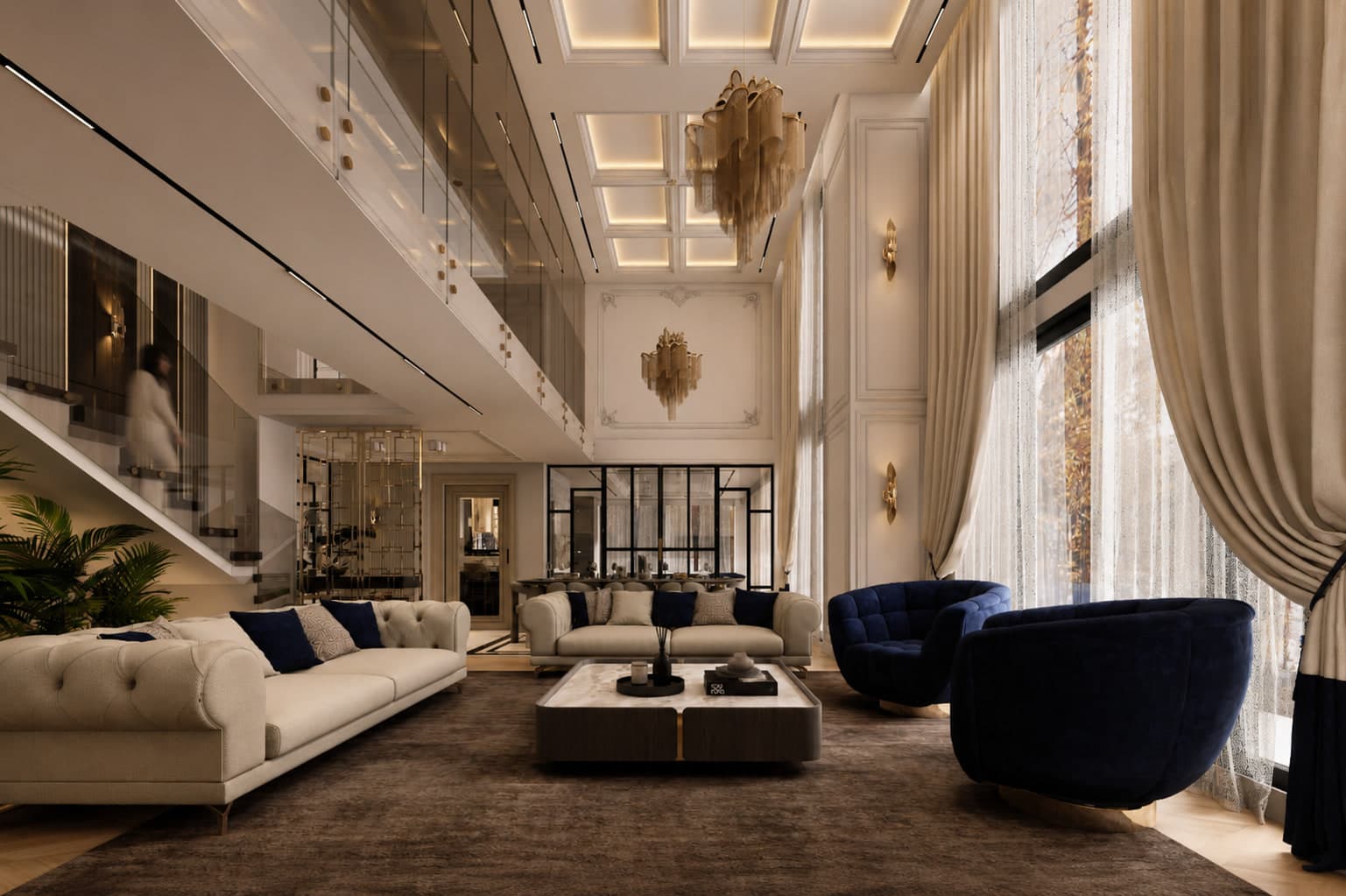
Searching for an interior architect in Ankara often ends in confusion between similar portfolios and similar promises. In this guide you will find 10 concrete criteria — from reading portfolios correctly to process transparency, execution capability and contract clarity — plus the questions to ask at the first meeting.
A home, a villa or a workplace... Finding the right team to entrust your space to is a decision as important as the project itself. Among Ankara's interior architecture firms, dozens present similar images and similar promises; yet once the process begins, what makes the difference is hidden not in the visuals but in the way a team works. In this article, we list 10 concrete criteria so you can compare interior design firms in Ankara on solid ground.
Why does the right choice matter so much?
The cost of choosing the wrong interior architect is usually unfinished work, stretched timelines and a process that ends with "if only". The right team does not merely deliver a beautiful space; it makes the process predictable, relieves you of the technical burden and ensures your decisions still look right years later. For those seeking the best interior design experience Ankara has to offer, the selection criteria go far deeper than pretty portfolio shots.
1. Read the portfolio correctly: completed work, not renders
The most critical distinction in any portfolio is the difference between a 3D visualization (render) and a photograph of a completed project. A render is an intention; a completed project is proof of how faithfully that intention was carried into reality. While reviewing a firm's interior architecture projects, ask: "Was this space actually built — and if so, how faithful is it to the concept?" A firm that can show the concept image and the delivery photo side by side will show the same consistency in managing your project.
2. Make sure their expertise matches your project
Every interior architecture firm has a scale and typology it is strongest in: some specialize in residences, some in offices, some in food and beverage spaces. A villa project does not run on the same muscles as a café project; the brief, the technical infrastructure and the process are entirely different. Look at the firm's recent work: do they have projects of similar scale and complexity to yours?
3. Can they resolve architecture and interior design together?
In villa and comprehensive renovation projects especially, the position of walls, ceiling levels, stairs and lighting are intertwined with interior design decisions. The most common problem in projects where architecture and interiors are handled by separate teams is the two disciplines noticing each other too late. We have written separately about why integrated design matters; in short: a team that speaks both languages saves you both time and revisions. For more on this distinction, see our article interior architect or architect.
4. Process transparency: clear steps from survey to handover
A reliable firm does not hide its process; it explains it step by step. What you will receive at each stage — site survey, needs analysis, concept presentation, construction drawings, production and handover — should be clear from the very beginning. Our article on the turnkey interior architecture process is a useful reference for what a healthy process looks like. A team that cannot explain its process clearly cannot manage a project clearly either.
5. Execution capability: do they only draw, or do they build?
There are two types of firms in the market: those that only produce drawings, and those that also execute or supervise the work on site. Both are legitimate; what matters is which one you need. If the team that drew the project is not at the table during execution, every site decision falls to you. A firm that also executes or supervises must stand behind every detail it draws — the most natural insurance of quality.
6. Contract and scope clarity
A good collaboration starts with a well-defined scope. The contract should clearly state what will be delivered (drawing set, 3D visuals, room schedules, detail sheets), your revision rights, the timeline and the definition of handover. "We'll sort it out as we go" is the most expensive sentence in this business; professional firms are never reluctant to put scope in writing.
7. References and site visits
Photographs can be flattering; seeing a completed space in person reveals workmanship quality, detail solutions and how materials age. Ask the firm for one or two completed projects you can visit, or past clients you can speak to. A team that welcomes this request is a team that stands behind its work.
8. Knowing the district
In Ankara, building stock and living habits differ significantly between districts: the high-ceilinged older apartments of Çankaya and the newer gated communities of Çayyolu cannot be approached the same way. A team that knows the area, its building typology and the local craftsman network asks the right questions during the survey and works with the right craftsmen during execution.
9. Communication and chemistry: who is your contact?
An interior architecture project is an intense communication process lasting months. Is the team at the first meeting the same team that will run the process? How fast do they respond? Do they listen and solve your needs, or sell you their ready-made formulas? A team that does not understand you at concept stage will not understand you during execution.
10. Is the timeline realistic?
"We'll finish very quickly" sounds attractive, but quality demands respect for production, curing and installation times. A realistic team explains the process in phases and tells you why each stage takes the time it does. A firm that does not shy away from writing the timeline into the contract is a firm that trusts its own planning.
8 questions to ask at the first meeting
- Which projects of similar scale have you completed — can I visit one?
- Who will design the project and who will supervise the execution — who is my single point of contact?
- What exactly will I receive at the concept, construction drawing and handover stages?
- How do my revision rights work?
- Do you execute with your own team or through subcontractors?
- Are you brand-independent in material and furniture selection?
- What is the project timeline — will the delivery date be in the contract?
- Do you provide after-delivery support?
Frequently Asked Questions
What is the most important criterion when choosing an interior architect?
Rather than a single criterion, look at the intersection of two: the quality of completed work and the transparency of the process. A beautiful portfolio combined with a vague process is a risky combination.
How should I compare interior design firms in Ankara?
Present the same brief to several firms and compare the responses: who listened, and who offered a ready-made formula? Evaluate within the triangle of portfolio, process and execution capability.
How should I prepare for the first meeting?
Bring your needs list, examples of spaces you like, your floor plan if available and your timeline expectations. The clearer you are, the more comparable the answers you receive.
Can I work with an interior architect based outside Ankara?
Design work can proceed remotely; however, the site survey and execution supervision must happen in person. For a project in Ankara, working with a firm that knows the region and local teams is a serious advantage on site.
At Kaya + Partners, we resolve architecture and interior design under one roof in Ankara, running every step transparently from survey to turnkey delivery. If you are wondering who would actually lead your project, we set out how we work as an interior designer in Ankara on a separate page. Explore our interior architecture services in Ankara or contact us to discuss your project.